

 Polski
Ultrasound, Two Ways: AI Reads the Abdomen, a Headband Treats the Mind
This week in diagnostic imaging shows just how fast the line between "mere imaging" and full-fledged clinical support is blurring. On one side, an algorithm describing abdominal ultrasounds better than expected; on the other, an ultrasound device that doesn't diagnose but treats. Here's what it means for the industry.

01 · AI in Radiology
AI that doesn't just see, but also writes the report [1]
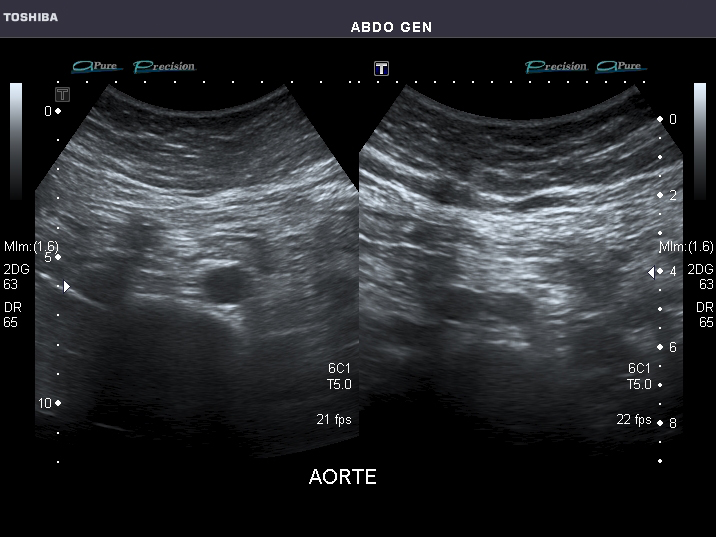
A team from the University of Colorado Anschutz School of Medicine has developed an AI model that analyzes right-upper-quadrant abdominal ultrasound images together with the patient's clinical data [1]. The algorithm recognizes 16 common conditions – from pancreatitis to bowel obstruction – and immediately generates a preliminary report [1]. The most interesting part is how its performance was tested: in a "blind" trial, experts couldn't tell apart reports a radiologist had edited after the AI's first pass from reports a doctor had written entirely from scratch [1]. The claimed accuracy reaches 99.6 percent, which is impressive in itself, but the study's authors remain cautious – they stress that the tool is meant to support radiologists, not replace them, and that further testing is needed before it can be deployed in a real emergency department [1].
This is another step toward automating radiology reporting, long one of the most time-consuming parts of a radiologist's job. If models like this actually make it into everyday practice, it will change not only the pace of work but also how young radiologists are trained – a question well worth debating at trade-show booths in its own right.
02 · Ultrasound Therapy
Ultrasound moves beyond imaging – and into psychiatry [2]
Speaking of ultrasound: the University of California San Francisco has just opened the MESSI-LEO clinical trial, in which ultrasound isn't used for imaging at all, but for therapy [2]. A head-worn headband fitted with a focused-ultrasound emitter made up of 128 elements is aimed at the brain's caudate nucleus – a structure linked to psychotic symptoms in schizophrenia patients [2]. The goal: to modulate activity in this brain region without the need for invasive neurosurgery [2].
It's a striking example of how technology familiar from radiology and cardiology suites – probes, emitters, ultrasound waves – is starting to take on a life of its own in a completely different field of medicine. For ultrasound equipment manufacturers and biomedical engineers, it's a signal that it may be worth looking at their technologies more broadly than just through the lens of diagnostic imaging – the boundaries of application are shifting faster than the boundaries of the devices themselves.
03
Two poles of one technology
Put side by side, these two stories capture the direction the entire diagnostic imaging industry is heading: on one hand, ever-stronger automation and AI support in everyday image interpretation; on the other, the discovery of entirely new therapeutic uses for equipment that until recently was associated purely with imaging. Abdominal ultrasound and brain ultrasound used as a therapeutic tool rely, formally speaking, on the same physics – yet they represent two completely different business and regulatory models, and both are worth watching.
We'll be discussing exactly these kinds of breakthroughs – and which of them will actually make their way into Polish clinics and hospitals – at the Forum Diagnostyki Obrazowej 2026 medical imaging technology and equipment trade fair. See you at the booths!
Invitation
From AI that writes abdominal ultrasound reports to wearable ultrasound headbands treating schizophrenia – the boundaries of diagnostic imaging are shifting week by week. See these technologies in action live, and talk to the people building them at Forum Diagnostyki Obrazowej 2026. Book your spot now!
Forum Diagnostyki Obrazowej 2026Przypisy
[1] Rynek Zdrowia — https://www.rynekzdrowia.pl/Nauka/AI-pomoze-radiologom-Zapalenie-trzustki-czy-niedroznosc-jelita-beda-szybciej-wykryte,290705,9.html[2] Tech Times — https://techtimes.com/articles/329802/20261031/ucsf-opens-trial-wearable-ultrasound-silenced-voices-all-3-schizophrenia-patients.htm
This review was prepared by the Ptak Warsaw Expo editorial team.